
Termites, Cockroaches And Spiders can run but they can't hide from Micropest Pest Control Sydney.
Termites, Cockroaches And Spiders can run but they can't hide from Micropest Pest Control Sydney.






|
Bed Bugs Sydney | Bed Bug Pest Control Treatment And Removal.
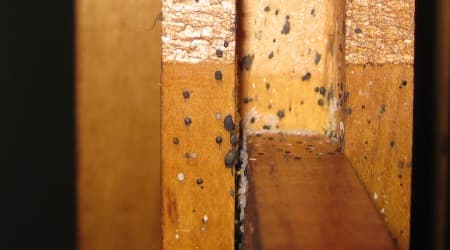
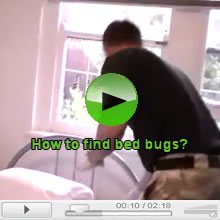
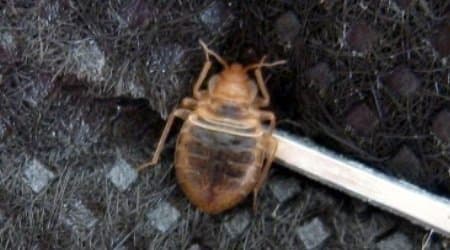
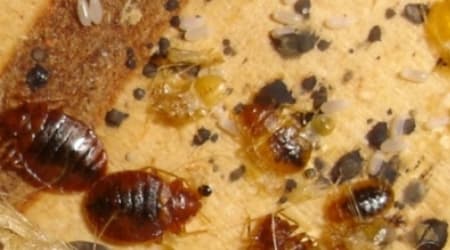
Micropest bed bugs Sydney is a safe yet very effective bed bug pest control company that provides a 12-month warranty on most bed bug pest control treatments. The following web page is designed to inform you, the consumer, about bed bugs (bedbugs), bed bug bites, bed bug (bedbug) pictures, identification and reproduction. Micropest is an environmentally responsible company. Watch our Bed Bugs And Bed Bug Pest Control Treatment Video or our Bed Bugs, Bed Bug Bites, How to find Bed Bugs Video. 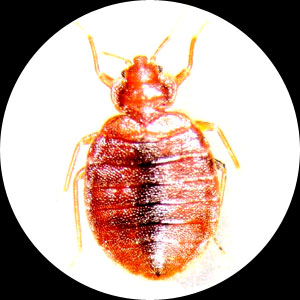 Bed Bug IdentificationBed bugs (bedbugs) are wingless insects, roughly oval-shaped, 4-5mm in length; they are deep reddish-brown, without wings, and with an elongated proboscis usually seen beneath the body as an extension from the head to the level of and between, the first pair of legs. The bed bug has lived intimately with humans longer than any other insect. Although it is a voracious blood-sucker, it has not been incriminated as a vector of disease. It is an important pest because it causes nightly irritation; the bites produce welts and mattresses, bed frames and sheets are soiled. An offensive "buggy" odour characterises heavy bed bug infestations. The incidence of bedbugs has increased dramatically in Australia during the present century and more considerably after the 2000 Olympic Games held in Sydney. Nowadays, there appear to be two types of infestation, long-standing tolerated ones in substandard dwellings and occasional new infestations which can arise anywhere at all, including upmarket hotels. They are so transient; everyone is vulnerable. Bed bugs move from place to place in people's baggage - trunks, suitcases and baskets and furniture. Since there are many places in the tropics and in the northern hemisphere, which still have considerable problems with bedbugs, travellers or migrants may bring bugs to this country and establish new colonies. Returning travellers, especially those who have gone beyond normal tourist facilities, are most likely to be dismayed at the appearance of bed bugs in their homes. Over the past few decades, most reported infestations have been linked to importations from overseas. In places where bed bugs are well-entrenched, their survival is materially assisted by the type of dwelling. The essential factor is an abundance of crevices into which the bugs can retreat during the daytime and in which they breed. Skirting boards, architraves, picture rails, pictures, headboards, mattresses and especially bed frames. Evidence Of A Bed Bug Infestation.The first evidence of bedbugs may be the awareness of bite reactions on the skin in the morning. Bed bug bites generally last for seven to nine days, are very itchy and are the size of a mosquito bite. Bed bug bites can often be differentiated from flea bites, and bird lice bites by their arrangement in typical lines due to the multiple probing of each bug and the size of the bite. Flea bites are a lot smaller and are generally around the ankles. Lice bites are also a lot smaller. Fleas defecate while feeding but the flea passes minute droplets of bright red undigested blood which may show as tiny red flecks on sheets. The only other blood stain from a biting insect on nightwear is that from a mosquito and this takes the form of a smear made when an engorged mosquito is squashed by the hand. Bed Bug Reproduction Cycle.After hatching from the egg, the immature bed bugs require a blood feed before they can develop to the next nymph-al stage. There are five such stages, and a full meal is adequate for development to the next successive stage. After the fifth moult, the insects are adults. Egg Laying for the next generation commences after a blood meal and fertilisation of the bug, but not before the fifth to the tenth day of adult life. Development is prolonged in cold weather, more rapid in the warmer months. Eggs are laid in batches of about ten, but a total of 200 to 500 or more may be laid during the life of the female. Hatching of eggs requires from 7 to 30 days, usually about 10. The duration of each nymph-al stage is approximately a week in warm weather. Hence, the length of the life cycle from egg to adult is from about 45 days to almost a year. Adult life may vary widely from about 50 to 300 or more days. Adult survival can occur without a blood meal for up to twelve months. (Click to enlarge)
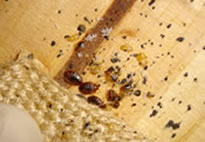
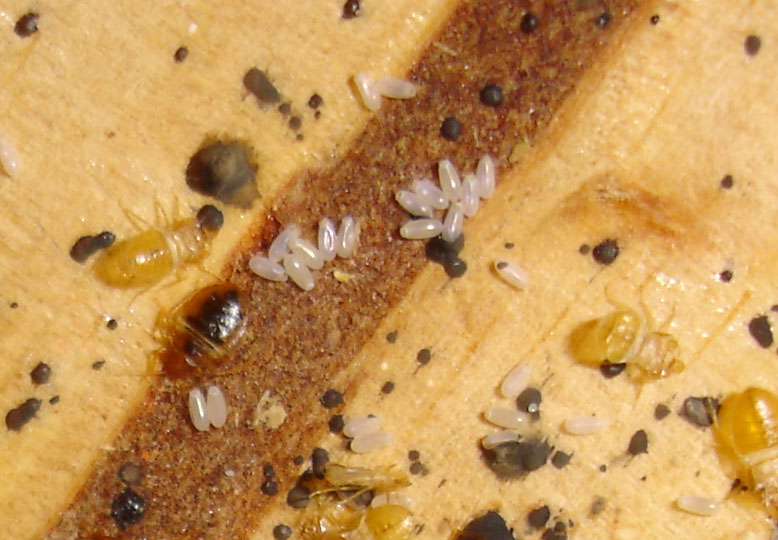 Bed Bug Eggs Bed bug Habitat.Bed bugs tend to only feed on humans at night and seek shelter during the day. The shelter can be under mattresses, floorboards, paintings, carpets, behind skirtings, cracks and crevices in walls, in bed frames, other furniture and behind loose wallpaper.
(Click to enlarge)
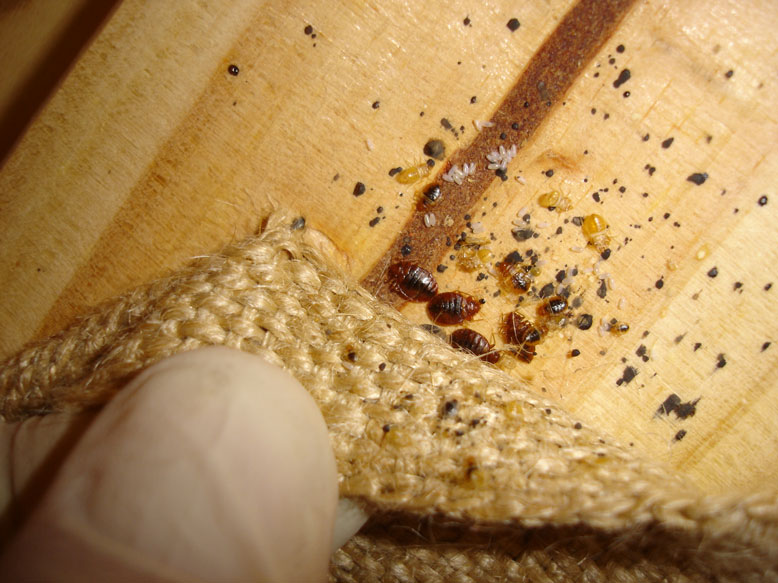
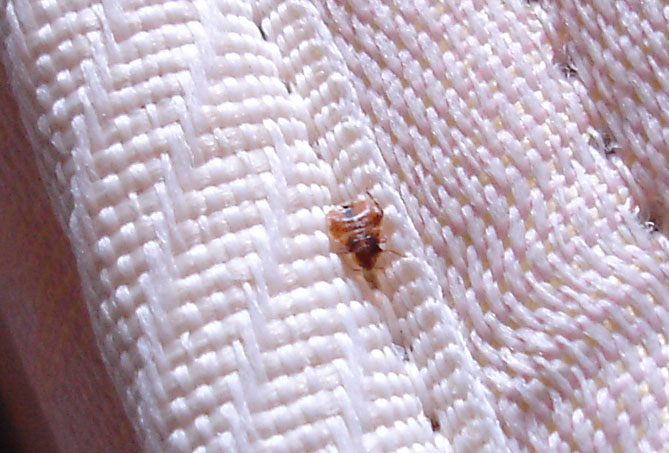
Bed Bugs Hiding Bed bugs are likely to be brought into the house on luggage, clothing, bedding and furniture. You are likely to be bitten on the arms and shoulders.
(Click to enlarge)
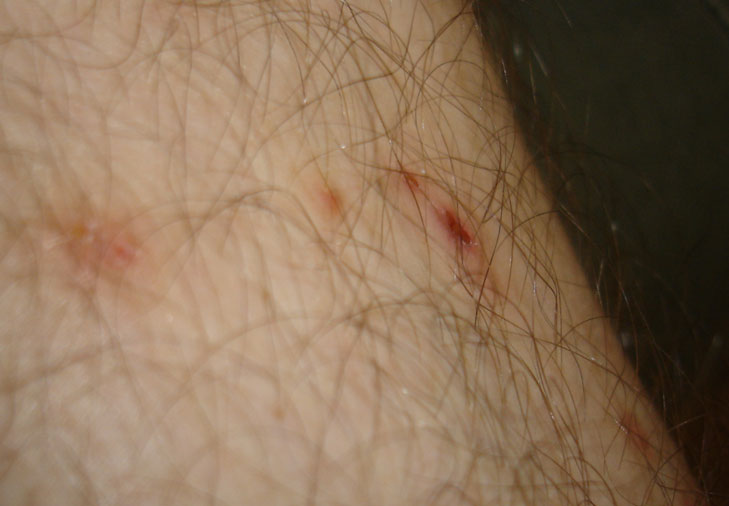
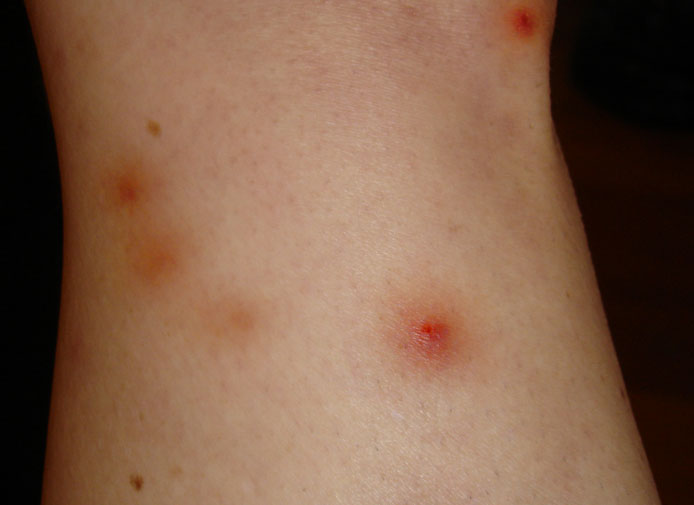
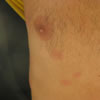
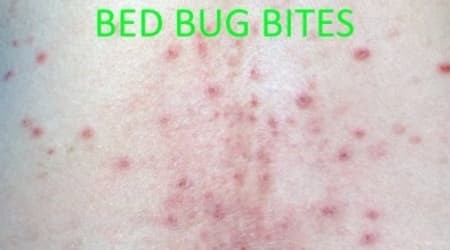
Bed Bug Bites Common allergic reactions include the development of large welts, which are accompanied by itching and inflammation. The welts usually subside to red spots that can last for several days. If bed bugs are suspected, a licensed pest controller should be consulted. A careful inspection must be undertaken and all possible hiding places within infested and adjoining rooms examined.
(Click to enlarge) 
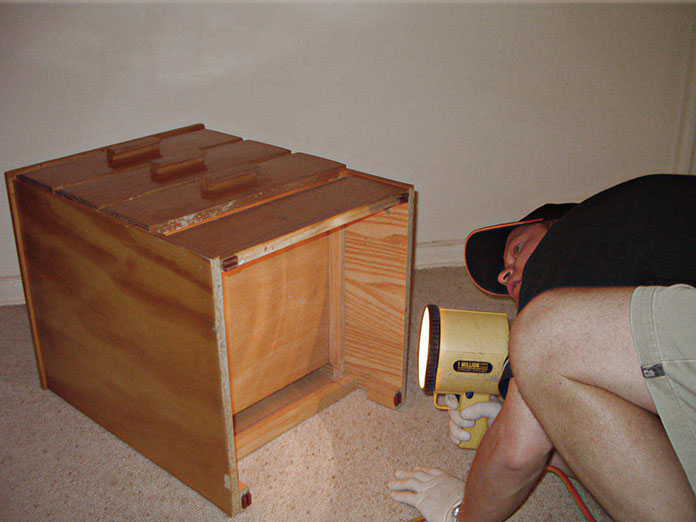
Bed Bug Inspection Bed Bug Inspection.The bedbug is an insect that feeds on blood throughout its life. The preferred blood source is human, although laboratory colonies can be established in association with animals such as rabbits, dogs and cats. In natural infestations, no blood source other than human is of any consequence. Both activity and feeding are nocturnal, the day being spent hiding in dark crevices. Hiding places can be in the junctions of the bed frame, under mattress buttons, and in any available crevices of the walls. Hiding places are concentrated in an area close to where feeding takes place; bedbugs do not move unnecessary distances. Seldom will an infestation be dispersed over an entire room; characteristically, the vicinity of the bed is most important. Dispersion of bedbugs is slow, the only apparent exception being from one room to another through an imperfectly sealed dividing wall. Feeding takes place on the limbs and trunk of the victim. Several individual attempts at feeding are made before the bug is finished, and this often results in a series of welts close together in a straight or curved line due to the bed bugs forward movement after each probing. The welts can be confluent. Insertion of the mouthparts without actual feeding also results in a welt reaction. The arrangement of these welts, if as described above, is diagnostic. Bed Bugs Sydney Price List.Because of the complexity of eliminating bed bugs, every bed bug pest control service is different. Please call for a quote to accurately give you a price; I need to know how many beds, lounges and people you have in the house. How long you have had the bed bug infestation, and the extent of the infestation. A lot of the time, clients will ring me up and order a bed bug pest control treatment because they are getting bitten by something. Micropests company policy requires you to send a picture of a bed bug in your house before we can make a date for a bed bug treatment. There are many biting insects in Sydney, and or you might have an allergic reaction to something else, not necessarily bed bugs. Bed bug Pest control Sydney.A lot of the time, clients will ring me up and order a bed bug pest control treatment because they are getting bitten by something. Micropests company policy requires you to send a picture of a bed bug in your house before we can make a date for a bed bug treatment. There are many biting insects in Sydney, and or you might have an allergic reaction to something else, not necessarily bed bugs. Bed bugs can be an alarming and persistent issue in any household. That's why when it comes to fighting these pests, being informed and ready is key. Micropest Pest Control Sydney offers a comprehensive bed bug pest control method that's not only effective, environmentally friendly and the only pest control company in Sydney that gives a twelve month service free warrenty. Before Treatment: Your Preparation Checklist For Bed BugsAssessment: If you suspect bed bugs, contact Micropest. Over the phone, we will ask questions about your bites and recent travels to determine if bed bugs are present.Must send us a live bed bug befoure engaging our services. Cleaning: Vacuum floors, mattresses, bed frame, sofa and furniture thoughly. Bedding: Remove all bedding and put in a dryer on high heat for 30 minutes. Mattress: Place your mattress outside in direct sunlight. Space: Move your bed and furniture half a meter from the wall, ensuring easy access for treatment.Remove any stored items from under the bed and place them a half meter away from th bed frame. Remember: Avoid removing items from the affected rooms to prevent spreading the bed bug infestation. During Treatment: Micropest's Thorough ProcessInspection: Upon arrival, Micropest will inspect your home. We look for signs of bed bugs, fecal matter, eggs, or casings, especially around sleeping areas. Mattress Safety: Install bed bug mattress protectors on your mattresses to trap any bed bugs inside. Focused Treatment: Apply Ficam W strategically around critical points like bed frame and furniture legs. This product is safe, non-repellent, and known for its lasting effects. General Application: Treat other surfaces with Cislin 25, a broad-spectrum, low-toxicity solution safe for indoor use and on furnishings. After Treatment: Ensuring Complete EradicationDry: Wait for at least two hours before restructuring your bed. Positioning: Keep the bed away from the wall to expose bed bugs to the treated areas. Follow-up: Contact Micropest three weeks after the initial treatment to schedule a second round of eradication, typically four weeks later, ensuring newly hatched bed bugs are addressed. Guarantee Peace of MindMicropest's bed bug pest control treatment is backed by a 12-month service free warranty, assuring you relief from bed bugs. Even though rare, should there be a resurgence within the guarantee period, Micropest covers the necessary treatment.At Micropest, your health and safety are our top priority. If you ever encounter a service suggesting spraying your mattresses or using unsafe practices, reach out to us instead. For further bed bug pest control information please refer to the Pest Control for the bed bugs by Micropest Mission Statement?Bed bugs Sydney company Micropest Pest Control Sydney will endeavour to assist you in the best and most helpful way and will always treat the customer with respect honestly and ethically. 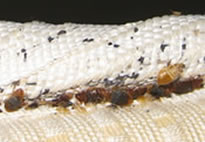
Our Locations WahroongaAddress: 24/24-36 Pacific Highway, Wahroonga N.S.W 2076 Phone:1300 243 377 Hours: Open 7 days, 7 am–10 pm We provide the same day emergency services for the Upper North Shore suburbs of Wahroonga, Pymble, Hornsby, Turramurra, Westleigh and Thornleigh. BerowraAddress:111 Yallambee Road Berowra, Sydney N.S.W 2081. Phone:(02) 9489 0013 Hours: Open 7 days, 7 am–10 pm We provide the same day emergency services for Berowra, Galston, Arcadia, Brooklyn, Mt White, Mt Colah and Asquith. ArtarmonAddress: 43 Whiting St, Artarmon NSW 2064 Phone:1300 884 166 Hours: Open 7 days, 7 am–10 pm We provide the same day emergency services for the Lower North Shore suburbs of Artarmon, Chatswood, Lane Cove, Roseville, Lindfield, Killara, North Sydney, Neutral Bay, North Bridge and Castlecrag. |

|
||||||||


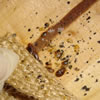
.jpg "Bed bugs and regurgitated bed bug blood on a mattress.")