
Pest ControlSydney TermitesPest Control VideosSydney RatsDangerous SpidersParasitic InsectsCockroachesGeneral PestsChemical Safety DatasheetsPest Control Blog
|
Pest Control and Termite Control SpecialistsTermite Control and Termites by Micropest Pest ControlMicropest termite control offers some helpful hints and information about termites and termite control in Sydney. Micro Pest control is one of Sydney's leading termite control companies which utilises safe yet effective termite control products. Micropest termite control prides itself on using the latest technological termite protection equipment and termite control treatments for termite pest control and termite protection for domestic and commercial properties in Sydney, Australia. All Micropest Termite Control operators have been in the industry for over 15 years and will sincerely endeavour to rectify your termite problem effectively and safely. For any further information please don't hesitate to contact the Micropest office on 1300 24 33 77 or likewise email us. Termite Control VideoThe following termite control video's are designed to educate you the consumer on what a termite control treatment is and what Micro Pest control can offer you in regards to termite protection.
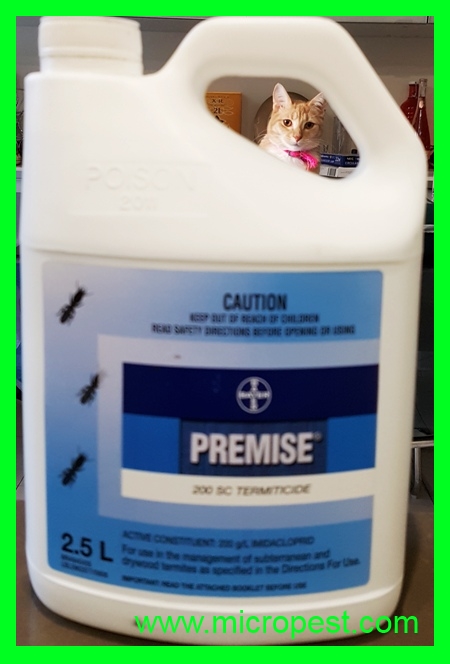
Termite Pest ControlMicro Pest control has been providing termite protection for Sydney homes and buildings for over eighteen years. Over this time we have utilized a number of different termite control methods, weeding out the ineffective and retaining the best termite protection methods. The following paragraphs are a brief synopsis of the termite protection methods Micro Pest control utilizes. Termite Control with Premise Termites treatment.Premise is a liquid, residual, non repellant termite control treatment. Premise is water based, non-repellant, environmentally friendly, pet friendly, no odour and has a very low toxicity. In fact, the active ingredient in Premise (imacadclorapid) is used for flea control on cats and dogs (Advantage). Premise termite protection is the only soil termite control treatment that does not require the occupants to leave while Micro Pest Control is carrying out the termite pest control treatment. Basically a Premise termite treatment is a residual treatment that bonds to the soil particles around all the structures coming up out of the ground around your house or building. The following links provide you with a more indepth explanation of what Premise is and how its applied.
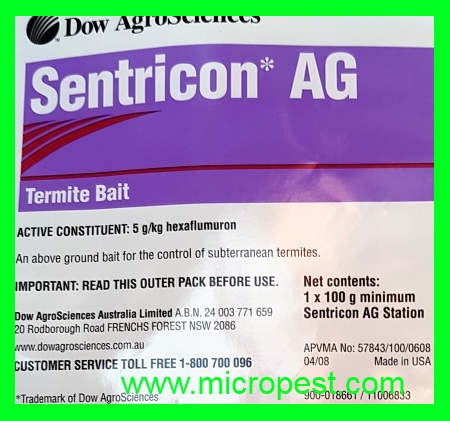
Termite Control with Premise Termites Treatment Termite Control - Sentricon Termite Baiting by MicropestSentricon termite baiting is fast becoming the most popular termite control method in Sydney. Sentricon bait is a food used to attract, entice or lure termites to a desired location. The principle of sentricon baiting system is to put the sentricon bait in an aggragation device once a vast number of termites have accumulated in them. Once the termites eat the baits, it affects their moulting. Surely but gradually the nest & termites starts to die. The following links provide you with a more indepth explanation of what a sentricon termite control system is and how it is applied. Termite control - Sentricon Termite Baiting- This page is the Sentricon Termite protection Sydney brochure. Chemical safety Data sheet Micropest - Sentricon technical termite protection information Why pick Micro Pest Termite Control?
Termite control PricelistBecause of the complexity of a Termite control treatment a quote cannot be obtained without a termite inspection report, however please call because Micro Pest Control can sometime estimate an approximate price over the phone. Termite Control FAQ
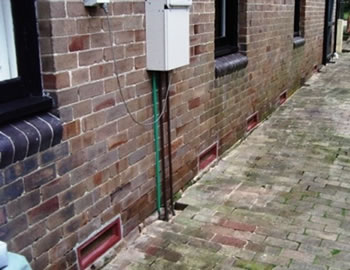
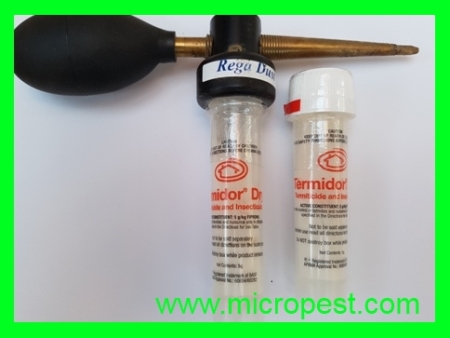
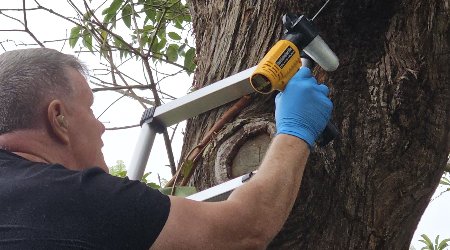
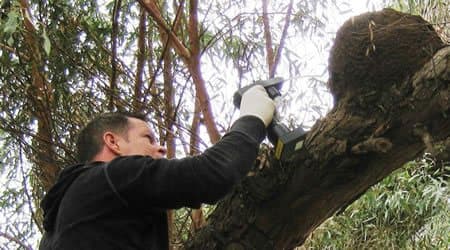
Subterranean Termite Treatment Proposal (AS 3660)Specifications for termite colony control procedures It is very important that you DO NOT disturb any termite workings, leads, galleries, etc before commencement of the treatment program. If you disturb the termites then these treatment procedures may be rendered ineffective. Where applicable: Suspect trees and stumps within 50 metres of the structures, usually only within the boundaries of the property, are test drilled using an auger drill.to determine whether a termite colony is present in the vicinity. If a nest is located it is destroyed by the careful application of a suitable termiticide. After drilling, any living trees are treated with a plant protection compound to prevent any subsequent plant disease prior to the sealing of the hole. A termiticide dust is carefully applied to suitable termite workings and/or leads which must then be left undisturbed for a period of approximately 14 - 21 days before re-examination and evaluation. If termite activity is still present the termiticide dust will be reapplied and the property reinspected in a further month. Any liquid chemical application recommended should not be applied until all termite activity has ceased within the property. The amount of termiticide dust applied varies with the chemical used and the size of the infestation. Generally 10g or less is all that is required. Where a termite baiting program is recommended a suitable number of termite bait stations will be installed in the grounds of the property. These must be left undisturbed and will be checked by us on a routine basis. When a suitable level of termite attack has occurred a termite dusting treatment, as detailed above, will be performed. This procedure is dependent upon the termites finding the bait stations and may take several months or more, to be effective. Specifications for treatment of accessible subfloor crawl spaces Termiticide is applied at the rate of 5 litres per square metre for horizontal barriers up to 50 mm deep and 100 litres. per cubic metre for vertical barriers so as to form a complete and continuous treated soil barrier and/or treated zone (both vertical and horizontal) by trenching and rodding beneath and around the structures. Soil is loosened to a depth of at least 80mm and spacings for rodding are no more than 150 mm apart. The barrier is continuous where the subfloor crawl space is less than 400mm high; and at least 150mm wide, abutting all substructure piers, walls and connections, where the subfloor crawl space is more than 400mm high. Specifications for drilling of concrete slab areas Where concrete areas such as driveways, paths or the like are located in external areas that are to be treated, it is always our first recommendation to have the concrete cut and removed to allow full access for treatment. It is not possible to verify that a complete barrier and/or treated zone has been installed when drilling and injecting termiticide beneath concrete. Concrete slabs and paths, both internally and externally will be drilled, using a concrete hammer drill. Holes around perimeter walls will be drilled in accord with AS 3660 at up to 200 mm centres, depending upon the substrate beneath the concrete. Holes are drilled as close as possible to the walls. The termiticide is applied at a rate of 10 litres per lineal metre ie up to 2 litres per hole. Holes will be sealed on completion. Where a recommendation has been made to grid pattern drill a concrete slab (not waffle pod slabs), the perimeter of the slab will be drilled as above and the remainder of the slab drilled as recommended on the termiticide label. The Termiticide will be applied to the holes at a rate as specified by the label. Holes will be sealed on completion. Specifications for ventilation The Australian Standard recommends that subfloor regions should have adequate cross flow of air equivalent to 7300 mm2 net ventilation area per lineal metre on external and internal walls. IMPORTANT INFORMATION: The Australian Standard AS 3660 series details methods for the detection, treatment and minimisation of subterranean termite infestation in and around buildings. These barriers and/or treated zones impede termites from gaining concealed access to timber and other termite susceptible material. AS 3660 also details methods for minimising the risk of reinfestation by termites. Client, Address, Structure at, State, Postcode, Phone, Date of Proposal, Facsimile, Provided by: INSPECTION AND COLONY CONTROL MEASURES Perform thorough inspection with written report in accordance with AS 3660. A. Gain access to the following concealed areas: - B. Check & test drill suspect trees, stumps and timber piers as detailed below: - C. Control the termite colony by removal and/or direct destruction of the nest in the following areas: - D. Treat the termite colony indirectly by applying dust to termite workings in the following areas: - E. Implement a termite monitoring and/or baiting program in the following areas: - F. Improve ventilation by: - G. Remove materials conducive to termite infestation, eg timber retaining walls: - H. You must arrange for a builder to determine the extent of any structural timber damage. I. In our presence, you must arrange for a builder to expose termite entry points in the following areas: - J. You must arrange for repair/installation of termite shielding (ant caps) in the following areas: - K. You must arrange to improve drainage and reduce moisture levels in the following areas: - L. A further inspection will be carried out in x days to assess the above colony control measures. If termite activity is found further colony control measures will be undertaken. Only when all termite activity (evidence of live termite activity not found) appears to have ceased within the inspected building/s will the barrier and/or treated zone treatments commence. BARRIER TREATMENT OPTIONS in accordance with AS 3660 and the product label Accessible (suspended) subfloor areas M. Where clearance is more than 400mm trench or scarify to create a vertical and horizontal barrier or treated zone around all substructure walls and piers with a minimum depth of 50mm below the top of the footings and a minimum width of 150mm. Termiticide will be applied in accord with AS 3660 at the rate of 100 L per m3 with the soil being backfilled. N. Where clearance is less than 400mm scarify to a depth of 50 mm and create a horizontal barrier over the entire subfloor soil surface (access permitting) by applying termiticide at 5 L per m2 as per AS 3660. Concrete slab on ground - inside the structure - O. Drill holes along the internal edge of the slab not more than 150 mm out from the wall at 150 mm to maximum of 200 mm centres and inject with termiticide at a rate of 1.5 L to 2 L per hole as per AS 3660. Holes will be sealed on completion. P. Drill holes along one side of all the internal walls not more than 150 mm out from the wall at 150 mm to maximum of 200 mm centres and inject with termiticide at a rate of 1.5 L to 2 L per hole as per AS 3660. Holes will be sealed on completion. Q. Other Paths, patios, pavers and steps - Where concrete, brick or paver patios, paths or steps abut the structure. R. We/You arrange to cut concrete and/or remove bricks or pavers to allow for a treatment strip of at least l50mm wide. S. Trench to a depth of 50 mm below the top of the footing (minimum of 80 mm) and apply termiticide while back filling as per AS 3660 at the rate of 100 L per m3. T. Drill holes in patios, verandah, steps or paths as close as possible to the adjacent external walls of the structure at 150 mm to a maximum of 200 mm centres and inject termiticide at a rate of 1.5 L to 2 L per hole as per AS 3660. Holes will be sealed. U. Remove bricks as appropriate to view under all in-fill slabs. V If not filled then access will be cut and an application as detailed in Accessible (suspended) subfloor areas (see page 2) will be carried out. If filled then grid pattern drill all patios, steps, verandahs and all in-fill concrete slabs and inject termiticide to form a continuous horizontal barrier. Holes will be sealed. W. Other X. Trench along all external walls of the building down 50 mm below the top of the footing. Apply termiticide and back fill as per AS 3660 at the rate of 100 L per m’. The minimum depth of this barrier must not be less than 80 mm. Y. Other Follow up inspections - Following the completion of the above treatment program, an inspection will be carried out in x days and then again at 6 months after the original treatment. Subtotal of all work agreed by you as marked above: 1. If you accept ALL of the above recommendations, we will provide a month Free Service Period. (see Page 5);- See Important Conditions on page 4 Client’s Acceptance: 2. If you DO NOT accept all of the above recommendations you will receive a free service period for x months. However the free service period only applies to the work you agreed to have performed. Areas NOT treated will NOT be covered by the free service period and will only be treated at your expense. See Important Conditions on page 4 Client’s Acceptance: 3. Some building construction makes the installation of a complete termite barrier or treated zone impossible without carrying out major building work. Your property is such a building. We CANNOT Warrant in any way that the treatment proposed will result in completely excluding termite entry. See Important Conditions on page 4 Client’s Acceptance: Termiticide/s to be used: - Important Conditions concerning your Subterranean Termite Treatment If during the course of the treatment program it is found that structural or environmental conditions prevent us performing any sections of the agreed Treatment Program then the Free service period offered may have to be reviewed or the cost of your investment may have to be revised. The prices advised overleaf are valid for 30 days, after that we reserve the right to make revisions. Warning. Where drilling and/or cutting is required through brick, concrete, timber or other surfaces no liability can be accepted should damage result to concealed services such as power, gas, water, etc. You should provide clear and accurate plans before commencement. You indemnify us against any costs that may arise from such possible damages if plans are not provided. All monies are due and payable upon invoice at the commencement of the treatment program. All free service periods are null and void unless payment has been received in full. You will arrange for free access to the property. Any restrictions to access or delays in granting access may result in us revising the investment required for treatment. You will provide 240v AC l5 amp power supply Within 30 metres of any areas to be drilled This proposal only applies to the treatment and application of barrier(s) and/or treated zone(s)to the structure(s) as detailed in this contract against attack by subterranean termites. It does not provide for protection against any other pest/s. In particular it does not include protection against “drywood termites”, FAMILY: KALOTERMITIDAE. In the event of subterranean termites returning within the service period, and upon notification by you, we will provide such services as detailed in that contract as accepted by you. Any free service is conditional upon you notifying us of any signs of termite infestation. Fences, gates, pergolas, and garden retaining walls are specifically excluded from the terms of any service period However, any signs of activity in these areas or in any part of the property must always be reported to us within 7 days. No responsibility is accepted, or Warranty implied, for any timber damage that may occur as the result of past, current or future termite activity. This Agreement may be extended at the end of the free service period, at our discretion, subject to you paying a further maintenance fee to be notified, g subject to our completing an inspection report and treatment proposal and you accepting our recommendations as notified in that report. Modem termite control agents are designed to be biodegradable therefore, the life of the barrier(s) and/or treated zone(s) they provide is limited by various environmental factors. The barrier will need to be renewed when the normal life expectancy (related to diminishing residual strength of chemical over time and environmental factors) of this barrier and/or treated zone is considered to have diminished 'and may not provide the level of protection as indicated on the product label. It is therefore imperative that you have regular, competent inspections by a licensed pest management firm (at least annually), and retreatments, as determined by those inspections. You accept that this termite treatment program can be rendered ineffective due to you making building alterations, renovations additions (including pergolas, awnings, verandahs, etc), introducing conducive materials, disturbing external gardens, pathways . etc adjacent to the areas protected and through establishing lawns &/or garden beds adjacent to the protected areas. (Such changes to the property are likely to breach the termite barrier and/or treated zone). Where such changes occur you must contact us for further treatment advice. You must be careful and take precautions to ensure that you do not in any way damage the soil barrier and/or treated zone created. With a concrete slab on ground home it is important that you ensure the edge of the slab remains exposed and is not covered up by garden materials eg soil, pine bark or similar. Also ensure that air vents or weep holes are never blocked. Do not use untreated timbers for garden beds or retaining walls, as they may attract termites. Warning. Where drilling and or cutting is required through brick, concrete, timber or other surfaces no liability can be accepted for the resulting damage to floor tiles, carpet, any other floor coverings or to the brick, concrete, timber or other surfaces. No liability or responsibility is accepted for termite entry to treated areas resulting from poor building design, or where the construction does not comply with AS 3660.1-2000 and the Building Code of Australia. Examples of such situations include, but are not limited to, cracking of concrete slabs, inadequate waterproofing, covering weep holes, inadequate termite protection to service entry points through concrete slabs, and the failure ,to fully remove form work timbers. Such faults may not be visible and as a result are not noted as limitations to the treatment. It is not always possible to fully protect a structure from termite attack without major structural alterations. See the diagram “Some Limitations To The Treatment” on page 6. This illustrates some common ways that termites can enter a building even after a termite barrier treatment has been installed. Specific Treatment Limitations - Regular Inspections - Termite barriers and/or treated zones do not kill termites, they only impede concealed entry thus forcing the termites to show themselves and making them easier to find during regular inspections. The Australian Standard AS 3660 recommends “regular, competent inspections should be carried out at least V on an annual basis, but more frequent inspections are strongly recommended". An inspection program x Inspections per year should commence not later than six (6) months after the last ‘follow up inspection’ as recommended. This inspection will be in accordance with AS 3660 and a full report will be provided. Additional information: Sketch (Mud map) not to scale: Please indicate North Free Service Period: Where a FREE Service Period has been provided then,-upon notification by you, we agree to provide you with any remedial treatment(s) as may be required to the treated structures, AT NO COST TO YOU. Any FREE Service Period is conditional upon you notifying us of signs of termite infestation. Fences, gates, pergolas, and garden retaining walls are excluded from the terms of any FREE Service Period. Any signs of activity in these areas must be reported to us.
Call us today: 1300 24 33 77 (1300 CHEERS) The Pest Control Specialist - Email us Here |
![]()
|
|||||||||||