
Termites, Cockroaches And Spiders can run but they can't hide from Micropest Pest Control Sydney.
Termites, Cockroaches And Spiders can run but they can't hide from Micropest Pest Control Sydney.






|
Fleas and Flea Control SydneyMicropest is one of Sydney's leading flea pest control companies. We utilize safe, effective, pet-friendly and environmentally friendly treatments when carrying out a flea pest control service. SPRING SPECIAL : Every Flea Control Treatment Get A Discount Sydney Pest Control Spray.The following flea information is a homeowner guide to educate you about flea identification, reproduction, habitat, flea pest control and how to reduce the chances of getting fleas in the house. 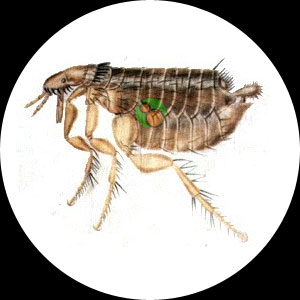 Fleas Pest Control TreatmentMicropest utilizes a treatment called Cislin when carrying out a flea pest control treatment. Cislin is a German chemically engineered treatment made by Bayer and is microencapsulated pyrethrum which has a residual life of approximately three months. 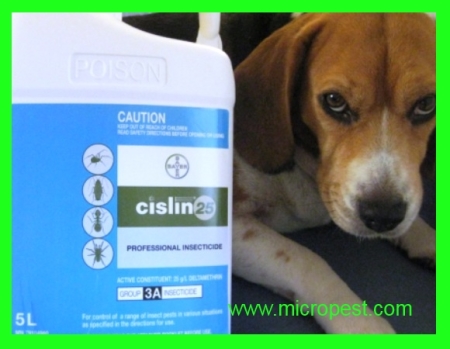 A safe, pet-friendly, children friendly, water-based, no odour, stainless, UV light resistant, rainfast flea pest control product. The formulation has changed slightly over the last seventeen years, but it is still the best flea pest control treatment on the market.  Micropest treats all the external areas such as gardens and lawns and all the internal floor areas of a house or building. After the initial flea pest control treatment, the adults generally die within the first few days; however, it can take up to seven to fourteen days to control fleas because the eggs are impervious to any treatments and must hatch before eliminating the fleas. 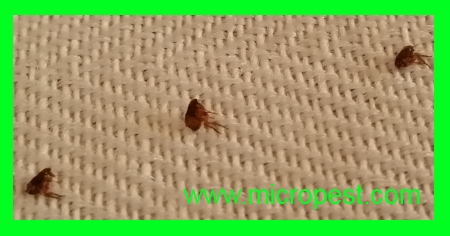 The flea egg hatches through vibration, and the flea needs a blood feed straight away. When the flea lands on a treated surface, it picks up the microencapsulated pyrethrum on its legs, and when it grooms itself, it ingests the treatment and dies. 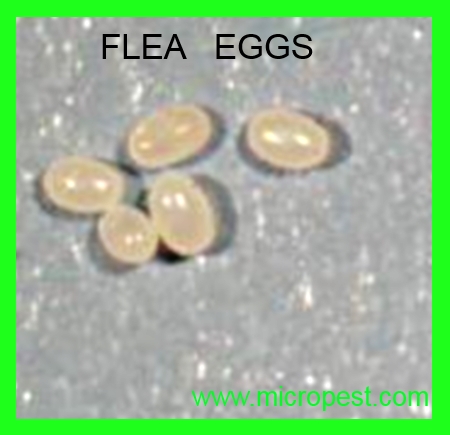 Fleas and Flea Control VideoThe following flea pest control video provides you with a step by step process on how a professional pest control technician eliminates fleas from your house and general information about fleas and how to reduce the chances of infesting your home. Flea IdentificationFleas and flea pest control have been an issue presenting themselves to humanity since the beginning of time. Fleas are highly specialized blood-sucking parasites that generally get introduced to the home by cats and dogs.  Fleas are 1.5 to 4.0 mm long, light brown to mahogany in colour and roughly oval-shaped. Their laterally flattened appearance allows them to move quickly. They have a small head with sawing and sucking mouthparts and two tiny eyes. Both males and females rely on blood for their nutrition but can survive for several months without it. Although there are more than 70 species known in Australia, very few of these are important to man. The human flea, dog flea and cat flea are the only ones we usually encounter. Flea ReproductionFleas have a four-stage life cycle. 1. Eggs, 2. Larvae, 3. Pupa, 4. flea adults. The complete life cycle from flea eggs to flea adults can vary from two weeks to eight months. Female fleas use the blood to nourish developing eggs, she will lay up to 4 eggs after each blood meal. Most female fleas will lay 100 eggs within her life of approximately eight months. The flea eggs are oval, white to cream in colour and measure 0.5mm in length. The flea eggs hatch when they are vibrated from animal or human disturbance. Fleas often lay their eggs while in the host, but the eggs are not sticky and easily fall off. When feeding, a flea usually takes more blood than is needed to engorge and after a while starts passing droplets of pure blood, which dry in small granules. If a cat has slept for some hours on a fabric and the surface beneath the cat is examined, it will be seen to be liberally scattered with minute (0.5 mm) but visible pearly white, oval eggs and reddish crystals of dried blood. These may be observed even though a casual inspection of the cat may not reveal the presence of fleas. The dried blood provides food for the larvae of the fleas. Eggs are laid mostly freely by domestic fleas when temperatures are above 21oC, and the relative humidity is also high at about 70 per cent. They hatch in 2-14 days, and the larval life can be as short as 9-15 days under very favourable climatic conditions but can be extended to 200 or more days, especially when temperatures are low. When the larva is mature, it spins a cocoon using its saliva to cement together particles of the medium in which it is breeding. This is commonly sand, dust or carpet fibres. The length of the pupal stage is influenced by temperature within the wide limits of 7 days to 12 months. Hence a minimum life cycle is about 18 days, but a flea may live for many months. Adult fleas are capable of considerable longevity: 100-500 days when blood is adequately available. Even unfed, they may survive for over 100 days. Hence there should be no mystery about flea infestations in unoccupied buildings. Flea HabitatFleas are likely to be found where pets feed, rest and play. I don't take my dog to the park from late December to late February because of all the fleas evident at the park. It's the peak of the flea season. Prolonged periods of warm, humid weather in the summer months provide ideal conditions for fleas to flourish. Although fleas are fully dependant on their host animal for food and do spend considerable time on their hosts, their true habitats are the nests or sleeping places of the host. Inside the home fleas can breed in floor cracks, carpets and upholstered furniture. This applies to both human and cat fleas. The latter may breed under the house if this is frequented by pets or in the kennel or sleeping places of dogs or cats and the garden if soil and climate are suitable. Human fleas have had the reputation of being associated with public buildings such as cinemas and public transport, probably with some justification, but standards of cleanliness, especially in public buildings, have improved rather than deteriorated over the past ten decades. This is an interference with an important means of dispersion of these fleas, which must travel from place to on the human host. Cat fleas will tend to remain important because the pet population is increasing rather than decreasing because breeding can take place both within and without the home. The statement 'my pet has no fleas' is seldom true. For both cat fleas and human fleas, the suitability of the home's interior for flea breeding is decreasing. Modern furniture is mostly quite unsuitable. However, modern carpets may have substantially longer piles than previously. The vacuum cleaner does much to remove fleas in all stages of their life history. Domestic uncleanliness certainly favours flea breeding. Flea Disease And TransmissionFleas are notorious vectors of disease, particularly the plague, but this disease has not occurred in Australia for over 90 years. The important vector of plague is the rat flea which seldom attacks humans unless rat populations are in plague proportions. Although not common, another disease transmitted by rat fleas, murine or endemic typhus occasionally occurs in this country. Certain intestinal worm parasites of dogs and cats can be transferred to humans by fleas, but as in this case, the infected flea has to be swallowed. This method of infection is not common. Flea Control PreparationMicropest requires our clients to carry out a few simple actions before we come around and flea control their house(s) or building. 1. Mow the lawns. 2. Vacuum all the internal floors and throw away vacuum bag afterwards. 3. Wash all pet bedding with an appropriate flea wash. 4. Pick up all unnecessary items on the ground inside and out as we need to treat as much floor space as possible for successful elimination. 5. Wash all the floors.
Flea control price list
Micropest provides the following flea pest control service with an approximate price. Please don't hesitate to ring because we do have specials from time to time and we are flexible.
Mission Statement.Flea Pest Control company Micropest Pest Control Sydney will endeavour to assist you in the best and most helpful way and will always treat the customer with respect honestly and ethically. The best Flea pest control Sydney has to offer. Our Locations WahroongaAddress: 24/24-36 Pacific Highway, Wahroonga N.S.W 2076 Phone:1300 243 377 Hours: Open 7 days, 7 am–10 pm We provide the same day emergency services for the Upper North Shore suburbs of Wahroonga, Pymble, Hornsby, Turramurra, Westleigh and Thornleigh. BerowraAddress:111 Yallambee Road Berowra, Sydney N.S.W 2081. Phone:(02) 9489 0013 Hours: Open 7 days, 7 am–10 pm We provide the same day emergency services for Berowra, Galston, Arcadia, Brooklyn, Mt White, Mt Colah and Asquith. ArtarmonAddress: 43 Whiting St, Artarmon NSW 2064 Phone:1300 884 166 Hours: Open 7 days, 7 am–10 pm We provide the same day emergency services for the Lower North Shore suburbs of Artarmon, Chatswood, Lane Cove, Roseville, Lindfield, Killara, North Sydney, Neutral Bay, North Bridge and Castlecrag. |

|
||||||||||||||||||