
Sydney Pest Control - Micropest Termite and Pest Control

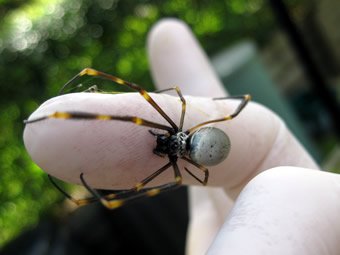
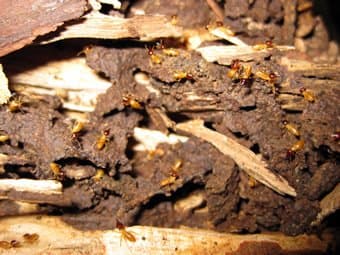
Termites Termites, Cockroaches and Spiders can run but they cant hide from Micropest Pest Control.


Pest Control and Termite Control Specialists

Pest inspections and Termite inspections

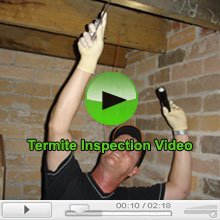
Micro Pest Control is one of Sydney's leading termite inspection (pest inspection) companies in Sydney Australia. Micro pest control has carried out thousands of termite inspections (pest inspections.) and over the years has increased their arsenal of termite detection equipment. The following video's give you a good description of how a termite inspection is carried out and what a termite inspection report contains. For any further information please don't hesitate to contact the Micropest office on 1300 24 33 77.

Termite Inspection Price List

Termite Inspection Video
Termite Inspection Report video
Termite Inspection Report Video

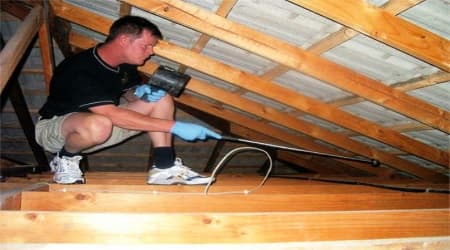
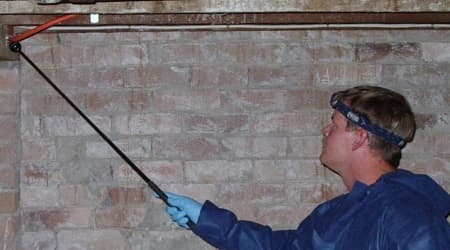
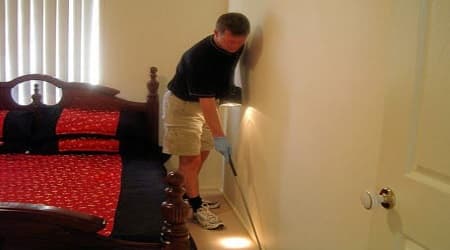
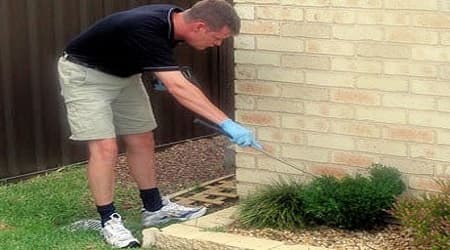
A termite inspection (pest inspection) report is a thorough visual inspection of the subfloor, roofvoid, internal and external areas of a house or building. It is strongly recommended in Sydney to carryout a pest inspection (termite inspection)at least once a year as termites cause millions of dollars worth of damage in Sydney every year.

Note: There is no household insurance that covers you for termite damage.

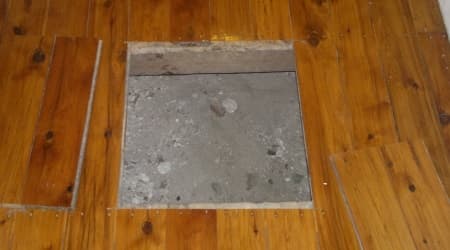
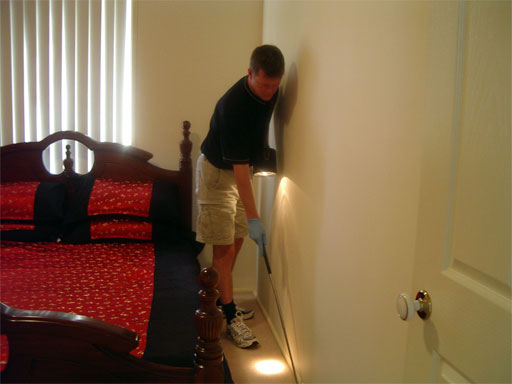
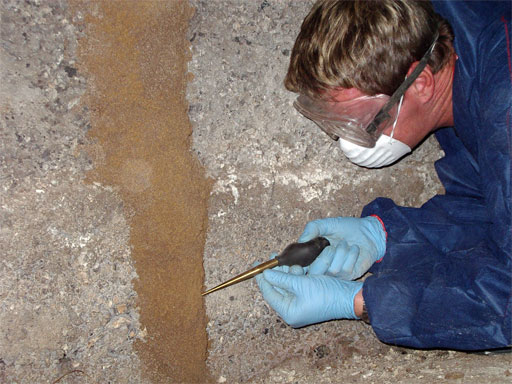
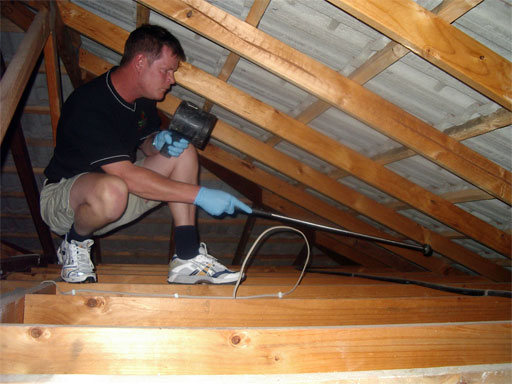
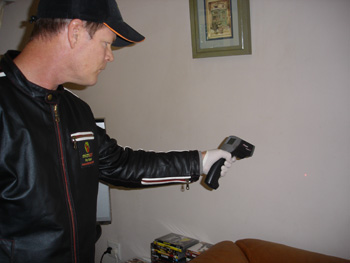
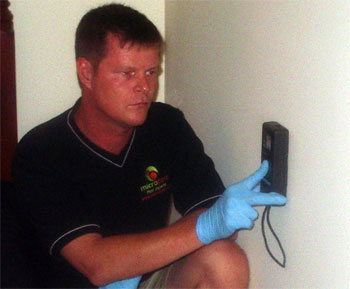
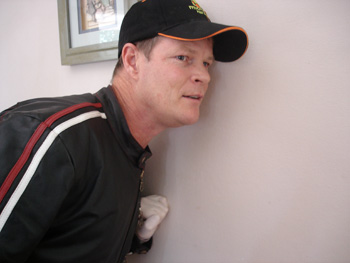
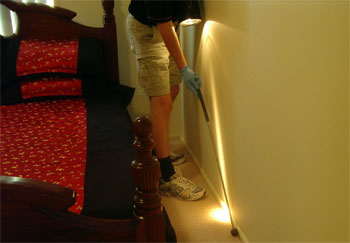
Internal pest inspection (Click to enlarge) External termite inspection (Click to enlarge) Sub Floor Termite Inspection(Click to enlarge) Roof void termite inspection (Click to enlarge)

Termite Inspection Price List


Micropest provides the folowing pest inspection price list with an approximate price. Please don't hesitate to call because we do have specials from time to time and we are flexible.

Termite Inspection Affordable Prices
Apartment $160.00
3 Bedroom House $180.00
4 Bedroom House $200.00
Commercial Building Call for Quote

What is a termite Inspection report?

  1. An eight page written report
  2. Detects old termite damage and the extent
  3. Detects active termites and the extend of damage
  4. Gives you the element of risk of a termite infestation
  5. Provides tips on reducing the chances of termites in your building
  6. Gives us enough information to accurately quote you on a termite control treatment and utilize the appropriate method to protect your building from termites
  7. Most importantly, educates you about termites.
  8. Identifies the termite species

Pest Inspection and Termite Inspection Report Equipment

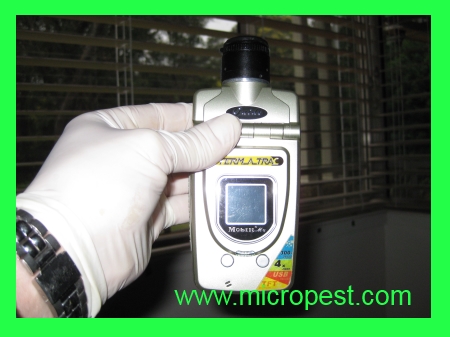
1. Termi Track

Termi Track is a very expensive and very effective tool in my arsenal of termite inspection equipment. It picks up movement of termites in walls and floors using microwave technology.

Termite Inspection Equipment - Termi Track

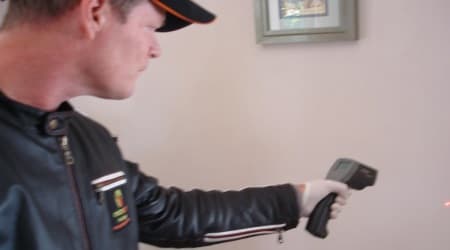
2.Thermal Gun

A thermal gun picks up temperature variations in walls and floors. This can help identify active termites.

Termite Inspection Equipment - Thermal Gun

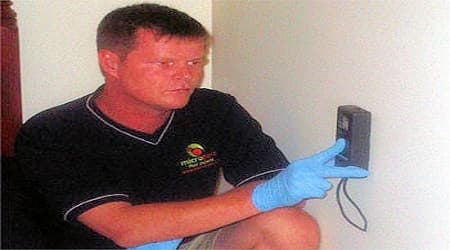
3. Moisture Meter

It is designed to pick up high moisture content in walls and timbers. Termites bring up moisture from the soil and into the walls and timbers.

Termite Inspection Equipment - Moisture Meter

4. Listening Device

This listens to sounds in the internal of the walls. However, if you tap the wall with your hand and put your ear up to the wall you can hear the soldier termites rubbing the manibles together.

Termite Inspection Equipment - Listening Device

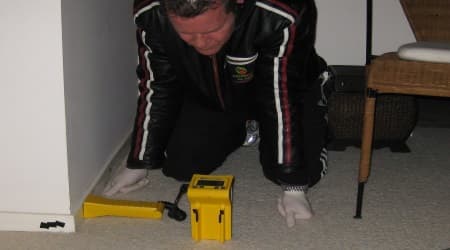
5. A Donger

It is dsigned to run along skirting and exposed timbers when it runs across termite infested timber the tone changes.

Termite Inspection Equipment - Donger

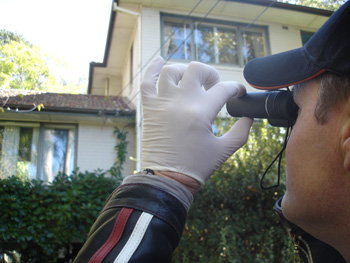
7. Binoculars

Binoculars are utilized to ascertain whether the roof has any major structural termite damage.

Termite Inspection Equipment - Bincoculars

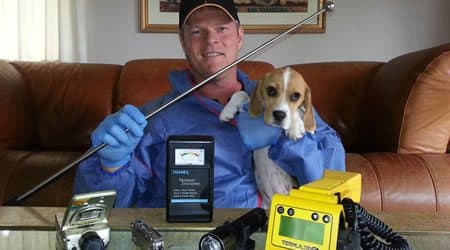
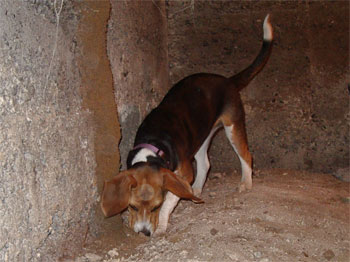
7. Rosey the apprentice termite detection dog

A dog's nose is 1000 times more sensitive than a human's smelling sense. Our Beagle, Rosey not only senses the moisture in the walls but also the methane which the termites expel.

Rosey, a Beagle, is our termite inspection dog

Example Termite Inspection Report (AS 3660.2-2000, in accordance with)

Important Information Any person who relies upon the contents of this report does so acknowledging that the clauses and information on pages 1, 4 and 6 define the Scope and Limitations of the inspection and form an integral part of the report.

THIS IS A VISUAL INSPECTION ONLY in accordance with the Australian Standard Termite management Part 2: In and around existing buildings and structures - Guidelines AS 3660.2-2000. Visual inspection was limited to those areas and sections of the property to which reasonable access (See definition on page 4 of this report) was both available and permitted on the date of Inspection. The inspection DID NOT include breaking apart, dismantling, removing or moving objects including, but not limited to, foliage, mouldings, roof insulation or sisalation, floor or wall coverings, sidings, ceilings, floors, furnishings, appliances or personal possessions. The inspector CANNOT see inside walls, between floors, inside skillion roofing, inside the eaves, behind stored goods in cupboards or in other areas that are concealed or obstructed. The inspector DID NOT dig, gouge, force or perform any other invasive procedures. An invasive inspection will not be performed unless a separate contract is entered into. In an occupied property it must be understood that furnishings or household items may be concealing evidence of termites which may only be revealed when the items are moved or removed.

SCOPE OF REPORT. This Report is confined to reporting on the discovery, or non-discovery, of infestation and/or damage caused by subterranean and dampwood termites (white ants), (hereinafter referred to as “termites”), present on the date of the Inspection. The Inspection did not cover any other pests and this Report does not comment on them. Dry wood termites (Family: KALOTERMITIDAE), borers of seasoned timber and wood decay fungi were excluded from the Inspection, but have been reported on if, in the course of the Inspection, any visual evidence of infestation happened to be found.

LIMITATIONS. Nothing contained in the Report implies that any inaccessible or partly inaccessible areas or sections of the property being inspected by the Inspector on the date of the Inspection were not, or have not been, infested by termites. Accordingly this Report is not a guarantee that an infestation and/or damage does not exist in any inaccessible or partly inaccessible areas or sections of the property. Nor is it a guarantee that a future infestation of termites will not occur or be found. No inspection of any furnishings or household items was made. No warranty is applicable, as this is an inspection only.

DETERMINING EXTENT OF DAMAGE. This Report does not and cannot state the extent of damage. It is NOT a structural damage report. If any evidence of termite activity or damage is reported, then it must be assumed there may be some degree of concealed damage. By way of example; where evidence of activity and/or damage is reported in the roof void timbers then damage is likely to be present in concealed wall timbers. A qualified person such as a Builder, Engineer, Architect or other qualified expert in the building trade should be asked to determine the full extent of the damage, if any, and the extent of repairs that may be required. This firm is not responsible for the repair of any damage whether disclosed or not.

POSSIBLE HIDDEN DAMAGE. If termite activity and/or damage is found, within the Structures OR the grounds of the property, then damage may exist in concealed areas, eg framing timbers. An INVASIVE INSPECTION is strongly recommended in this case. Damage may only be found when wall linings, cladding or insulation are removed to reveal previously concealed timbers.

CONSUMER COMPLAINTS PROCEDURE. In the event of any dispute or claim arising out of, or relating to the Inspection or the Report, or any alleged negligent act or omission on Our part or on the part of the individual conducting the Inspection, either party may give written Notice of the dispute or claim to the other party. If the dispute is not resolved within twenty one (21) days from the service of the written Notice then either party may refer the dispute or claim to a mediator nominated by Us. The cost shall be met equally by both parties or as agreed as part of the mediated settlement. Should the dispute or claim not be resolved by mediation then one or other of the parties may refer the dispute or claim to the Institute of Arbitrators and Mediators of Australia who willappoint an Arbitrator who will resolve the dispute by arbitration. The Arbitrator will also determine what costs each of the parties are to pay.

In the event any litigation is bought as a result of the inspection and/or report, you idemnify us against any legal fees and expenses incurred where you have not first allowed Us the opportunity to visit the property to investigate the complaint and provide you with a written response within 28 days.

Visual Termite Inspection Report in accordance with AS 3660.2-2000

Client:

Re: Structure at:

Address:

State:

Postcode:

Phone:

Fax:

Mobile:

Date of the Inspection:

Invoice No:

Brief description of the building and other structures on the property:

Type: Domestic, Commercial, Apartment/Unit/Flat, Other

Height: Single Storey, Multistorey, Split Level, Other

Building: Cavity Brick, Brick Veneer, Concrete Block, Stone, Weather-board, Stucco, Plastic/Vinyl, Aluminium, Hardiplank, Coated Metal Sheeting, Other Sheeting, Other

Piers: Brick, Concrete, Timber, Stone, Steel, Other

Floor: Concrete Slab, Timber with Concrete Areas, Timber, Chipboard, Timber with hardboard areas, Other

Roof: Tile, Coated Metal, Iron, Aluminium, Other

Fences: Colour Bond Type, Timber, Brick, Other

Brief description of areas inspected:

Interior, Roof void, Subiloor, Wall exterior, Garage, Carport, Out buildings, Trees, Stumps, Posts, Fences, Garden, Timber retaining walls, Landscaping timbers, Other

Only structures, fences, trees etc within 50 m of the building but within the boundary of the property were inspected. When a building, or part of a building is constructed on a concrete slab it is always more susceptible to concealed termite entry.

Area/s* NOT Inspected and/or Area/s* to which REASONABLE ACCESS for Inspection was NOT AVAILABLE and the Reason/s why. These include Area/s* in which Visual Inspection was Obstructed or Restricted:

Interior because, Roof Void because, Subfloor because, Wall exterior because, Garage because, Carport because, Out buildings because, Trees, stumps and/or posts because, Fences because, Garden and landscaping timbers because, Timber retaining walls because, Slab edge, which normally would be exposed because, Other: because:

* Since a complete inspection of the above areas was not possible, termite activity and/or damage may exist in these areas.

No inspection was made, and no report is submitted, of inaccessible areas. These include, but may not be limited to, concealed frame timbers, eaves, areas concealed by concrete floors, wall linings, soil, landscaping, rubbish, HOOI coverings, furniture, pictures, appliances, stored items, insulation, hollow blocks/posts. Fumishings, furniture & stored items were not inspected.

High Risk Area(s) to which Access should be gained, or fully gained, since they may show evidence of termites or damage:

Interior,Roof void, Subfloor, Wall exterior, Garage, Carport, Out buildings, Slab Edge, Weepholes, Other:

Was Insulation present in the Roof Void? YES, NO, Unable to determine, Reason:

Where insulation is present in the roof void it is recommended it be moved or removed and an inspection be carried out to the wall top plate timbers and other roofing timbers covered by the insulation. This invasive inspection will not be performed unless a separate contract is entered into.

Was the property furnished at the time of inspection? YES, NO

Where a property is furnished at the time of the inspection then you must understand that the furnishings and stored goods may be concealing evidence of termite activity. This evidence may only be revealed when the fumishings and stored goods are moved. In this case a further inspection of the property is strongly recommended.

SUBTERRANEAN TERMITES

At the time of the inspection were active termites (live insects) found? YES, NO

Active termites were located in but not necessarily limited to the following areas: Interior, Roof void, Subfloor, Wall exterior, Garage, Carport, Out buildings, Trees, Stumps, Posts, Fences, Garden, Timber retaining walls, Landscaping timbers, Other:

The termites are believed to be: Coptotermes species, Schedorhinotermes species, Nasutitermes species, Heterotermes species, Maslotermes darwiniensis, Other:

and have the potential to cause No, Moderate to Extensive, Extensive to Severe, amounts of damage to timber including structural damage.

A termite nest was found in (state the location):

Where a termite nest is located on or near the property, the risk of termite infestation is increased.

At the time of the inspection was visible evidence of subterranean termite workings and/or damage located? YES, NO,

If no evidence of termites was found at this inspection be aware that at the initial stages of a termite attack there is often no evidence that an attack has commenced, such evidence may only become apparent sometime after the attack has commenced. As the Inspection can only report details of what was found on the day of the inspection, we strongly recommend that should you find evidence of new termite workings or damage prior to the next recommended Inspection you should contact our Company immediately.

Termite damage and/or workings were found mainly in but not necessarily limited to:

Interior, Roof void, Subfloor, Wall exterior, Garage, Carport, Out buildings, Trees, Stumps, Posts, Fences, Garden, Timber retaining walls, Landscaping timbers, Other:

VERY IMPORTANT: Where any termite activity or damage is noted you must realise that further termite damage may be present in concealed areas. See Clauses 3, 4 and 5 on page 1.

Whilst we are not builders, the termite damage appears to be: Moderate, Moderate to extensive, Extensive, Extensive to Severe, See Clause 4 on page l. If a treatment proposal is attached then note areas marked on the sketch (mud map) for more information on areas of damage and activity.

IMPORTANT: If no live termites were noted above but visual evidence of termite workings and/or damage or any other signs of termites are reported then there may be active termites in concealed areas. Termites may still be active in the immediate Vicinity and may return to cause further damage. In most cases it may not be possible without the benefit of further investigation and subsequent inspections to ascertain whether an infestation is active or inactive. Active termites may simply have not been present at the time of inspection due to a prior disturbance, climatic conditions, or they may have been utilising an alternative feeding source. Continued, regular, inspections are essential. Unless written evidence of an appropriate termite management program in accord with “AS 3660 Termite Management” is provided, a treatment must always be considered to reduce the risk of further attack.

The following evidence of a possible previous treatment was found:

A durable sign was, was not, located.

If located, the sign was found in the meter box, the entry to the subfloor, or other

It indicates that a physical, or a chemical treated zone, or a combined physical and chemical treated zone system, or another termite management system [I has been installed. This firm can give no assurances with regard to work that may have been previously performed by other firms.

Subterranean termite treatment recommendation: A suitable management program that accords with AS 3660 against subterranean termites is considered to be essential III strongly recommended III not essential BUT an inspection every months is essential, not required as one is being carried out by us. A treatment proposal is attached.

Timber retaining walls should be replaced with non-susceptible material (Consult a Builder before replacing).

Termite Shields (Ant Caps) should be in good order and condition so termite workings are exposed and visible. This helps stop termites gaining undetected entry. Joins in the shielding should have been soldered dtuing the installation. Whenever it is observed that the joins in the shielding have not been soldered then the shielding must be reported as inadequate. It may be possible for a builder to repair the shielding. If not, a chemical treated zone may need to be installed to replace the use of the shielding. Missing, damaged or poor shields increase the risk of termite infestation.

Whilst not a builder it appears that termite shields are: Adequate, Inadequate, Not Applicable, Unable to assess

You should read and understand the following important information. It will help explain what is involved in a termite inspection, the difficulties faced by a termite inspector and why it is not possible to guarantee that a property is free of termites. It also details important information about what you can do to help protect your property from termites. This information forms an integral part of the report. If you do not understand any part of this report then please ask the Inspector to explain.

IMPORTANT

This report is provided solely for the benefit of the person/s named in this report or their client. Any third party relying on this report either wholly or in part does so at their own risk. We accept no liability whatsoever to any third party relying on this report.

Filled areas, areas with less than 400 mm clearance, damp areas, leaking pipes, form work timbers, scrap timbers, tree stumps etc either in the subfioor or adjoining, or close to the building are conducive to termite infestation. All leaks or drainage problems must be repaired. All form work, scrap timber and/or stumps must be removed from under and/or around the building/s. Rubbish should be removed from the subfloor areas to allow access for inspection. Items susceptible to termites, such as cardboard boxes, timber, firewood etc, should not be stored on the ground in the subfloor area.

This is an inspection only. No treatment or replenishment of any existing termite management systems has taken place. Termites may still enter the buildings or other structures at any time. You acknowledge this fact and agree that this company is not liable for any termite entry, or for any damage that may result. Modem tendicides are designed to degrade. This means the length of life of these chemical treated zones is limited. It is important that the property is inspected at least annually.

REASONABLE ACCESS

Only areas to which reasonable access is available were inspected and AS3660 refers to AS 4349.3-1998 which defines reasonable access. Access will Q be available where there are safety concerns, or obstructions, or the space available is less than the following:

ROOF VOID - the dimensions of the access hole must be a least 450mm x 400mm, and, reachable by a 2.1M step ladder or 3.6M ladder, and, there is at least 600mm x 600mm of space to crawl:

SUBFLOOR - the dimensions of the access hole must be at least 500mm x 400mm and, there is at least 400mm of space to crawl beneath the lowest bearer, or, 500mm beneath the lowest part of any concrete floor.

ROOF EXTERIOR - must be accessible by a 3.6M ladder

Reasonable access does not include the use of destructive or invasive inspection methods. Nor does reasonable access include cutting or making access traps, or moving heavy furniture or stored goods.

A MORE INVASIVE PHYSICAL INSPECTION IS AVAILABLE AND RECOMMENDED

As detailed above, there are many limitations to this visual inspection only. With the permission of the owner of the premises we WILL perform a more invasive physical inspection that involves moving or lifting: insulation, stored items, furniture or foliage during the inspection. We WILL physically touch, tap, test and when necessary force/gouge suspected accessible timbers. We WILL gain access to areas, where physically possible and considered practical and necessary, by way of cutting traps and access holes. This style of inspection is available by request. Several days notice may be required. Time taken for this type of inspection will be greater than for a VISUAL INSPECTION. It involves disruption in the case of an occupied property, and some permanent marking is likely. You must arrange for the written permission of the owner who must acknowledge all the above information and confirm that our firm will not be held liable for any damage caused to the property. Price available on request.

CONCRETE SLAB HOMES

Homes constructed on concrete slabs present special problems with respect to termite attack. If concrete paths, patios, pavers, garden beds, lawns, foliage, etc conceal the edge of the slab, then it is possible for termites to effect concealed entry into the property. They can then cause extensive damage to concealed framing timbers. Even the most experienced inspector may be unable to detect their presence due to concealment by wall linings. Only when the termites attack timbers in the roof void, which may in turn be concealed by insulation, can their presence be detected. Where termite damage is located in the roof it should be expected that concealed Haming timbers will be extensively damaged. With a concrete slab home it is imperative that you expose the edge of the slab and ensure that foliage and garden beds do not cover the slab edge. Weep holes must be kept free of obstructions.

If considered inadequate a builder or other building expert should be consulted.

NB Physical barrier systems installed in wall cavities etc are not visible to inspection

and no comment is made on such systems.

L19 Wood rot: At the time of the inspection was visible evidence of wood decay fungi (rot) found? YES Cl NO lj

Evidence was found in Interior [l Roof void lj Subfloor lj Wall exterior lj Garage lj Fences lj Other:

Wood decay fungi are conducive to subterranean termites. You should consult a builder or other building expert to find out what must

be carried out to prevent further decay (repairing of drainage, leaks and/or sealing the timber) and to repair the damage.

L11 Other areas and/or situations that appear conducive to (may attract) subterranean termite infestation: -

Timber in the subfloor lj [remove] Timber stored against the building/s El [remove] Timber debris around the outside of the

building/s Cl [remove] Formwork left in place in subfloor and/or under suspended slabs El [remove] Hot water tank overflow

pipe needs to be drained further away from the house or to a drain lil [rectU‘y] Trees, stumps and/or timber posts should be test drilled

and monitored lj [see attached proposal Q’ attached] Timber retaining wall/s should be replaced with non-susceptible materials III

[remove and replace] Landscape timbers should be replaced with non-susceptible material lj [remove and replace] Heavy foliage

against the building/s El [remove] Timber structures in contact with the soil and are attached to the building/s Cl [either remove or fit

termite proof stirrups between soil and the timber] Patios and paths etc attached to the building/s lj [where possible gain access/have

regular termite inspections]

Other: - -

2,!2 At the time of the inspection the degree of risk of subterranean termite infestation to the overall property was considered to be:

Moderate [1 Moderate to High : High II] Extremely High El

3_,ll ENVIRONMENTAL CONDITIONS THAT ARE CONDUCIVE TO TERMITES

3_1 Drainage: Poor drainage, especially in or into the subfloor or against the extemal walls, increases the likelihood of termite attack.

Whilst not a plumber, it appears that drainage is generally: Adequate lj Inadequate U Not able to assess III Not applicable II

Areas where drainage should be attended to by a plumber or other expert and why:

342 Water leaks: Water leaks, especially in or into the subfloor or against the external walls, increases the likelihood of termite attack.

Leaking showers units, leaks from outdoor taps, rainwater tanks or leaks from other ‘wet areas’ also increase the likelihood of termite

attack. Whilst not a plumber, it appears that water leaks are: Present I] Not present [II Not able to comment EI

Areas where leaks should be attended to by a plumber or other expert and why:

343 Hot Water Services and air conditioning units: which release water alongside or near to building walls need to be connected to

a drain as the resulting wet area is highly conducive to termites. If this is not possible the water needs to be piped several meters away

from the building.

Is there a need for this work to be carried out? Yes [I No U

Where drainage is considered inadequate or water leaks are reported then a plumber, builder or other building expert should be consulted.

3_3 Ventilation: Ventilation, particularly to the sub-floor region is important in minimising the opportunity for ternrites to establish themselves

within a property. Whilst not a builder the ventilation appears to be generally: Adequate El Inadequate lj Not able to assess II

Not applicable El

Where ventilation needs to be improved consult a builder or other expert.

We have attached a proposal to carry out ventilation improvement work: Yes EI No III Not applicable Ill

1,5 Slab Edge Exposure: Where extemal concrete slab edges are not exposed there is a high risk of concealed termite entry. In some

buildings built since July 1995 the edge of the slab forms part of the termite shield system. In these buildings an inspection zone of at least

75mm should be maintained to permit detection of termite entry. The edge should not be concealed by render, tiles, cladding, flashing,

adjoining structures, paving, soil, turf or landscaping etc. Where this is the case you should arrange to have the slab edge exposed for

inspection. Concealed temiite entry may already be taking place but could not be detected at the time of the inspection. This may have

resulted in concealed timber damage.

Does the slab edge inspection zone fully comply?

No, arrange for slab edge to be exposed lil No, not required as it is an infill slab III Not applicable [I Yes [Il

Not able to comment - refer to note top of page 6 |:l

--

Note: A very high proportion of termite attacks are over the edge of both infill and other concrete slab types. Covering the edge of a

concrete slab makes concealed termite entry easy. Infill slab type construction has an even higher risk of concealed termite ingress

as the slab edge is concealed due to the construction design and cannot be exposed. The type of slab may only be determined by

assessment of the construction plans by a qualified person e.g. Builder or Architect. Construction Plans may be obtainable from

your local Council or Builder. Termite activity and or damage may be present in concealed timbers of the building. We strongly

recommend frequent regular termite or timber pest inspections in accordance with AS 3660.2 or AS 4349.3-1998. Where the slab

edge cannot be determined then we strongly recommend tennite or timber pest inspections every 3-6 months in accordance with AS

3660.2 or AS 4349.3-1998.

Infill Slabs: A slab on the ground cast between walls. Other slabs should be in accordance with AS 2870 - 1996 and/or AS

3660.1-2000 and for more information you should ask a builder.

You should read and understand the following important information. It will help explain what is involved in a termite

inspection, the difficulties faced by a termite inspector and why it is not possible to guarantee that a property is free of

termites. It also details important information about what you can do to help protect your property from termites. This

information forms an integral part of the report. If you do not understand any part of this report then please ask the

Inspector to explain.

SUBTERRANEAN TERMITES

No property is safe from termites! Termites are the cause of the greatest economic losses of timber in structures in Australia.

Independent data compiled by State Forests shows l in every 5 homes is attacked by termites at some stage in its life, however CSIRO

data indicates that it could be as high as 1 in 3. Australia’s subterranean termite species (white ants) are the most destructive termites

in the world. In fact it can take"‘as little as 3 months for a tennite colony to severely damage almost all the timber in a home”.

How termites attack your home: The most destructive species live in large underground nests containing several million timber

destroying insects. The problem arises when a nest matures near your home. Your home provides natural shelter and a food source for

the termites. The gallery system of a single colony may exploit food sources over as much as one hectare, with individual galleries

extending up to 50 metres to enter your home, where there is a smorgasbord of timber to feast upon. Even concrete slabs do not act

as a barrier; they can penetrate through cracks in the slab to gain access to your home. They even build mud tubes to gain access to

above ground timbers. In rare cases termites may create their nest in the cavity wall of the property without making ground contact.

In these cases it may be impossible to determine their presence until extensive timber damage occurs.

Termite damage: Once in contact with the timber they excavate it, often leaving only a thin veneer on the outside. If left undiscovered

the economic species can cause many thousands of dollars damage and may cost two to five thousand dollars (or more) to treat.

Subterranean termite ecology: These termites are social insects usually living in underground nests. Nests may be in trees or in

rare instances they may be in above ground areas within the property. They tunnel underground to enter the building and then remain

hidden within the timber making it very difficult to locate them. Where timbers are concealed, as in most modem homes, it makes

it even more diiiicult to locate their presence, especially if gardens have been built up around the home and termite management

systems are either not in place or poorly maintained. Termites fomr nests in all sorts of locations and they are usually not visible.

There may be more than one nest on a property. The diet of termites in the natural environment is the various hardwood and softwood

species growing throughout Australia. These same timbers are used in buildings. Worker tennites move out from their undergrotmd

nest into surrormding areas where they obtain food and retum to nurture the other casts of termites within the nest. Termites are

extremely sensitive to temperature, humidity and light and hence cannot move over ground like most insects. They travel in mud

encrusted tunnels to the source of food. Detection of termites is usually by locating these mud tunnels rising from the ground into the

affected structure. This takes an expert eye.

Tennite management systems installed to AS3660-2000 help protect a building by forcing tennites to show themselves. Termites

can build mud tunnels around termite management systems to reach the timber above. The presence of termite tracks or leads does

not necessarily mean that tennites have entered the timber. A clear view of walls and piers and easy access to the sub-iioor means

that detection of tennites should be fairly easy. However many styles of construction do not lend themselves to ready detection of

termites. The design of some properties is such that they make the detection by a pest inspector diiiicult, if not impossible.

The tapping and probing of walls and intemal timbers is an adjunct or additional means of detection of termites but is not as reliable

as locating tracks. The use of a moisture meter is a useful aid for determining the presence of tennites concealed behind thin wall

panels, but it only detects high levels of activity. Damage and termite workings that have dried out will not be recorded. It may also

provide false readings. Temiite tracks may be present in the ceiling space however some roofs of a low pitch and with the presence

of sisalation, insulation, air conditioning ductwork and hot water services may prevent a full inspection of the timbers in these

areas. Therefore since foolproof and absolute certain detection is not possible the use of tennite management systems and regular

inspections is a necessary step in protecting timbers from termite attack.

TIMBER DECAY FUNGI

The fruiting bodies of wood decay fungi vary in size, shape and colour. The type of fungi encountered by pest controllers usually

resides in poorly ventilated subfloors, below wet areas of the home, exterior timbers and in areas that retain water in the soil. The

durability and type of timbers are factors along with the temperature and enviromnent. Removal of the moisture source usually

alleviates the problem. Fungal decay is attractive to termites and if the problem is not rectitied it may well lead to future termite

attack.

--

IMPORTANT INFORNIATION

There is no warranty given or implied as a result of the inspection or this report. The report can only give details of what was

found on the day and at the time of the inspection. Termites can gain entry to the structures at any time.

General remarks: A more thorough INVASIVE INSPECTION is available. Where any current visible evidence of termite activity

is found it is strongly recommended that a more invasive inspection is performed. Trees on the property have been visually inspected

up to a height of Zm, where possible and practicable, for evidence of termite activity. It is very difficult, and normally impossible

to locate termite nests since they are mainly underground and evidence in trees is usually well concealed. We therefore strongly

recommend that you arrange to have trees test drilled for evidence of termite nests.

Important Maintenance Advice regarding Integrated Pest Management for Protecting against termites

Termites can attack any structure. Periodic maintenance should include measures to minimise possibilities of infestation in and

around a property. Factors that may lead to infestation from termites include: -

~ Situations where the edge of the concrete slab is covered by soil or garden debris.

~ Filled areas, areas with less than 400mm clearance.

° Foam insulation at foundations.

° Poor drainage, leaking pipes, damp areas, form-work timbers, scrap timber, tree stumps, mulch, tree branches touching the

- structure, wood rot and timber retaining walls. Note: Termites often build nest behind timber retaining walls.

° Gardens, pathways or turf abutting or concealing the edge of a concrete slab will allow for concealed entry by termites.

All timber in contact with soil such as formwork, retaining walls, scrap timbers, ‘firewood or stumps must be removed from under and

around the buildings and any leaks or poor drainage repaired. You should endeavour to ensure such conditions DO NOT occur

around your property.

We further advise that you engage a professional pest control tirm to provide a suitable termite management program in accord with

AS 3660 to minimise the risk of termite attack. There is no way of preventing attack. AS 3660 advises that even when a complete

termite management system is installed in accordance with these Standards, it is possible termites may bridge the management system.

However, if bridging occurs, then signs of this bridging would nonnally be found during the regular inspections recommended by these

Standards.

Therefore, it is essential that the regular inspections recommended in this report are carried out in addition to any suitable termite

management system you install. -

DISCLAIIVIER OF LIABILITY: - No liability shall be accepted on account of failure of the Report to notify any termite

activity and/or damage present at or prior to the date of the Report in any areas(s) or section(s) of the subject property

physically inaccessible for inspection, or to which access for Inspection is denied by or to the Licensed Inspector (including but

not limited to any area(s) or section(s) so specified by the Report).

DISCLAIMER OF LIABILITY TO THIRD PARTIES: - Compensation will only be payable for losses arising in contract or

tort sustained by the client named on the front of this report. Any third party acting or relying on this Report, in whole or in

part, does so entirely at their own risk.

There are two very helpful books available, complete with excellent colour photos, which you might like to purchase. These are: -

A Homeowner’s Guide to Detection and Control of Termites and Borers

and

A Homeowner’s Guide to Detection and Control of Common Household Pests

Both books were written by Phillip Hadlington & Christine Marsden

and Published by University of New South Wales

Ask your inspector for details and prices.

--

QQ Weep holes in external walls: It is very important that soil, lawn, concrete paths or pavers do not cover the weep holes.

Sometimes they have been covered during the rendering of the brick work. They should be clean and nee Howing. Covering the

weep holes in part or in whole may allow undetected termite entry.

Were the weep holes clear allowing the free How of air? No, arrange for weep holes to be exposed lj Not applicable Ei Yes |:|
QQ Environmental, other Conditions and/or general information:

It is strongly recommended that a full Inspection and Report be carried out every I] months. Regular inspections DO NOT

stop termite attack, but are designed to limit the amount of damage that may occur by detecting problems early.

AS 3660 and AS 4349.3 both recommend at least 12 monthly inspections but strongly advise more frequent inspections. Regular

inspections DO NOT stop termite attack, but are designed to limit the amount of damage that may occur by detecting problems early.

ADDITIONAL INFORMATION AND/OR MUD MAP (NOT TO SCALE)

The Inspection and Report was carried out by:

(Name of Inspector)

State Licence No: Insurance Termite Accreditation No:

Dated this day of 20

SIGNED FORAND BEHALF OF:

(Name of Company)

Signature:

Tell us about your pest problem
  • About Termites
  • Termite Inspections
  • Termite Control
  • Sentricon Baiting
  • Premise Treatments
  • Funnel Web Spiders
  • Red Back Spiders
  • White Tail Spiders
  • Fleas
  • Ticks
  • Head Lice
  • Body Lice
  • Scabies
  • Ants
  • Bed Bugs Sydney
  • Bed Bugs Elimination
  • German Cockroaches
  • Australian Cockroaches
  • Pest Control Sydney
  • American Cockroaches
  • Smokey Brown Cockroaches
  • Oriental Cockroaches
  • Silverfish
  • Pest Control Video
  • Termite Control Video
  • Pest Control Treatment Video
  • Termite Inspection Video
  • Pest Inspection Report Video


  • Call us today: 1300 24 33 77
    (1300 CHEERS)

    The Pest Control Specialist - Email us Here


      Micropest - Pest control and Termite control
    Tell us about your pest problem


    Pest Control Video

    Micropest Intro Video


    Termite Control

    Termite Control Video


    Pest Control Video

    Pest Control Video


    Termite inspection

    Termite Inspection Video


    Pest Inspection Report

    Pest Inspection Report Video


    Funnel Web Spiders

    White Tail Spiders

    headLice

    Scabies

    German Cockroaches

    Oriental Cockroaches

    Smokey brown Cockroaches
    Pest Control Sydney

    Termite Control Sydney

    Bed bugs Sydney

    Termite Inspection Sydney

    Termites Sydney

    Fleas Sydney

    Cockroaches Sydney

    Rosey and Polly - Sydney pest control


    Red Back Spiders

    Ticks

    Bed Bugs

    Body Lice

    Australian Cockroaches

    Siverfish

    American Cockroaches

    Termites

    Spider control

    Spider control

    Termites

    Ants

    Pest Control Sydney © Copyright Micropest Pty Ltd 2010, Pest Control Sydney, Sitemap, Privacy Policy, Terms and Conditions